History of Berlin Double-Decker Buses - 1920s to Today
Explore 100 years of Berlin double-decker bus history. See the evolution from open-top roofs to the modern yellow icons of the city.
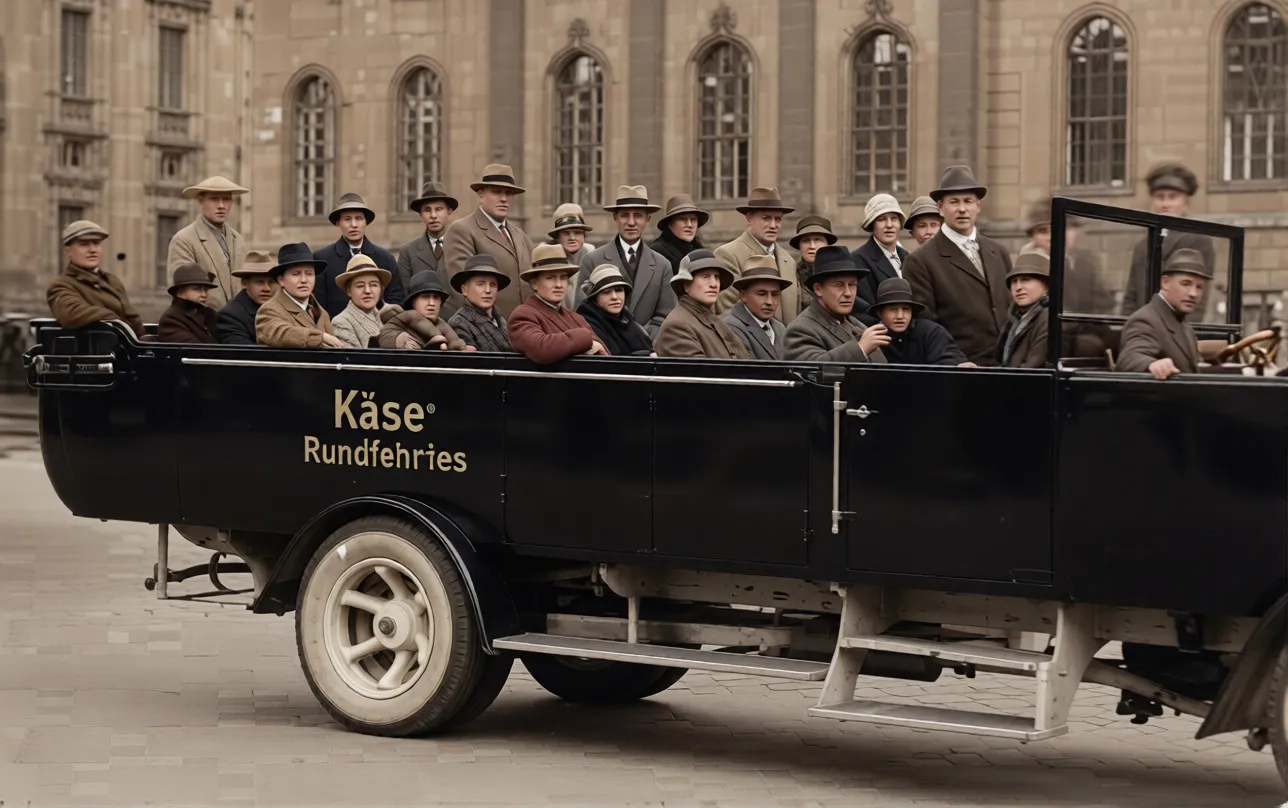
On Sunday, March 23, the first special trip of the year 2025 took place with a historic double-decker. Every year, the “ Association for Traditional Buses Berlin” organizes various trips through Berlin, because “transport history doesn't belong in a museum, but on the road”, according to the association's motto.
The trip started at 10:00 a.m. at Jungfernheide subway and S-train station and then continued for two and a half hours along the former BVG line 25 to Britz. We took this special trip as an opportunity to take a look at the Berlin double-deckers of the post-war period.
The Early Days: Roof Seats and Danger
One hundred years ago, the first double-deckers with an upper deck integrated into the bodywork were put into service by the Allgemeine Berliner Omnibus Aktien-Gesellschaft (ABOAG).
Before that, Berlin city buses had roof seats that could be reached via a staircase attached to the rear. In order to increase passenger capacity, benches were bolted onto the often curved roof of the single-deckers, which was fitted with a railing. However, the safety of the passengers sitting on top left much to be desired.
Even before the actual double-deckers, ABOAG passengers could sit on top. A spiral staircase was used to climb to the roof and take a seat on a bench. However, the surrounding railing could not provide the necessary safety against falling.
The First True Double-Deckers
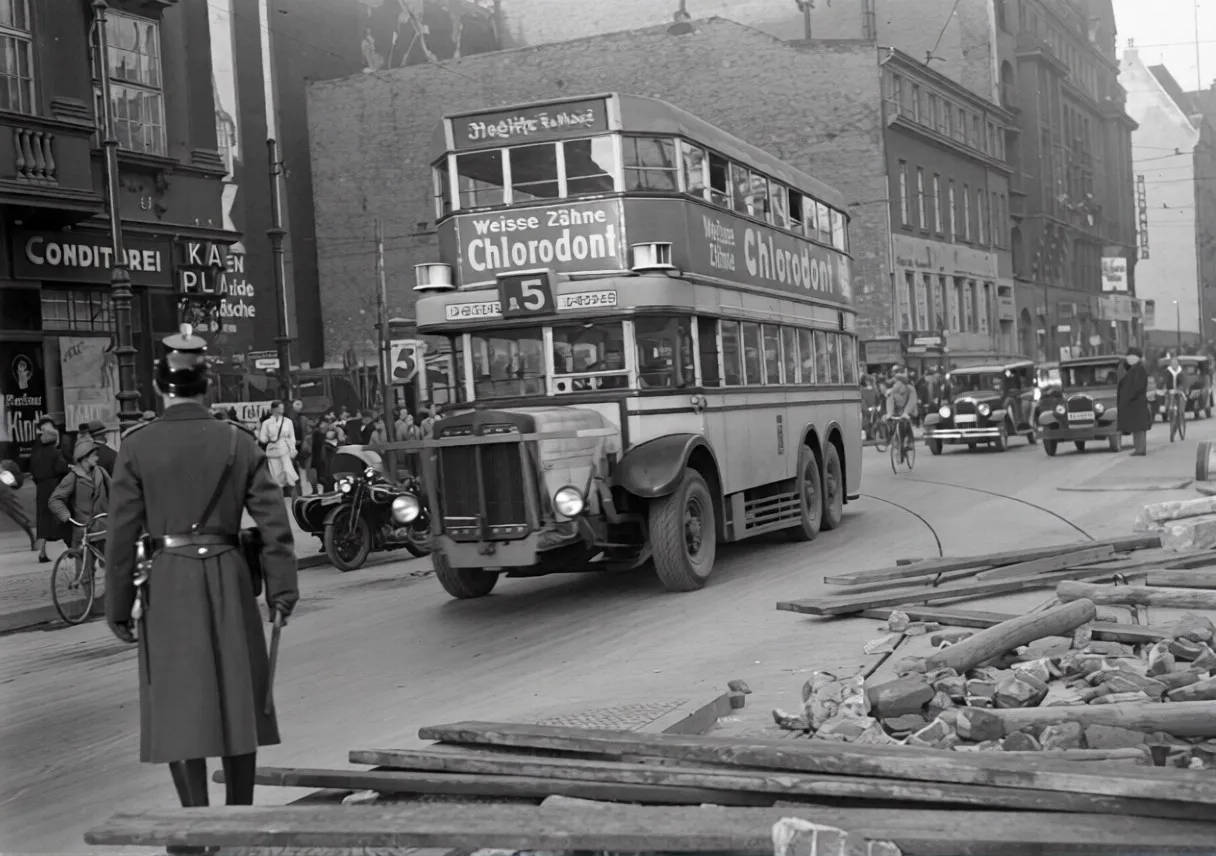
In 1925, ABOAG purchased one double-decker each from London and Chicago. The third was built in-house on a chassis from N.A.G. (Nationale Automobil Gesellschaft).
In 1927, the same Berlin based company received a large order for bus chassis, which were fitted with double-decker bodies at Orenstein & Koppel in Berlin according to an ABOAG concept. 175 buses of the D2 series were built by the end of 1928. Some of these vintage buses were in service until the 1950s, and two are still in existence today.
ABOAG purchased the first Berlin double-deckers with a closed upper deck from the Berlin based company Orenstein & Koppel. From 1925, the chassis of the National Automobile Company (N.A.G.) were fitted with double-decker superstructures there.
The "Snout" Era and WWII
The development took its course, the ABOAG became the Berliner Verkehrs Gesellschaft (BVG) in 1929. Until 1952, almost all double-deckers in Berlin had long "snouts" (hoods).
Hoods characterized the appearance of all Berlin buses for decades. The license plate of many double-deckers bore the letters “KB”, the abbreviation for Kommandantura Berlin, a designation of the Soviet occupying power. The nomenclature changed in 1956 when the “B” was introduced for all West Berlin vehicles.
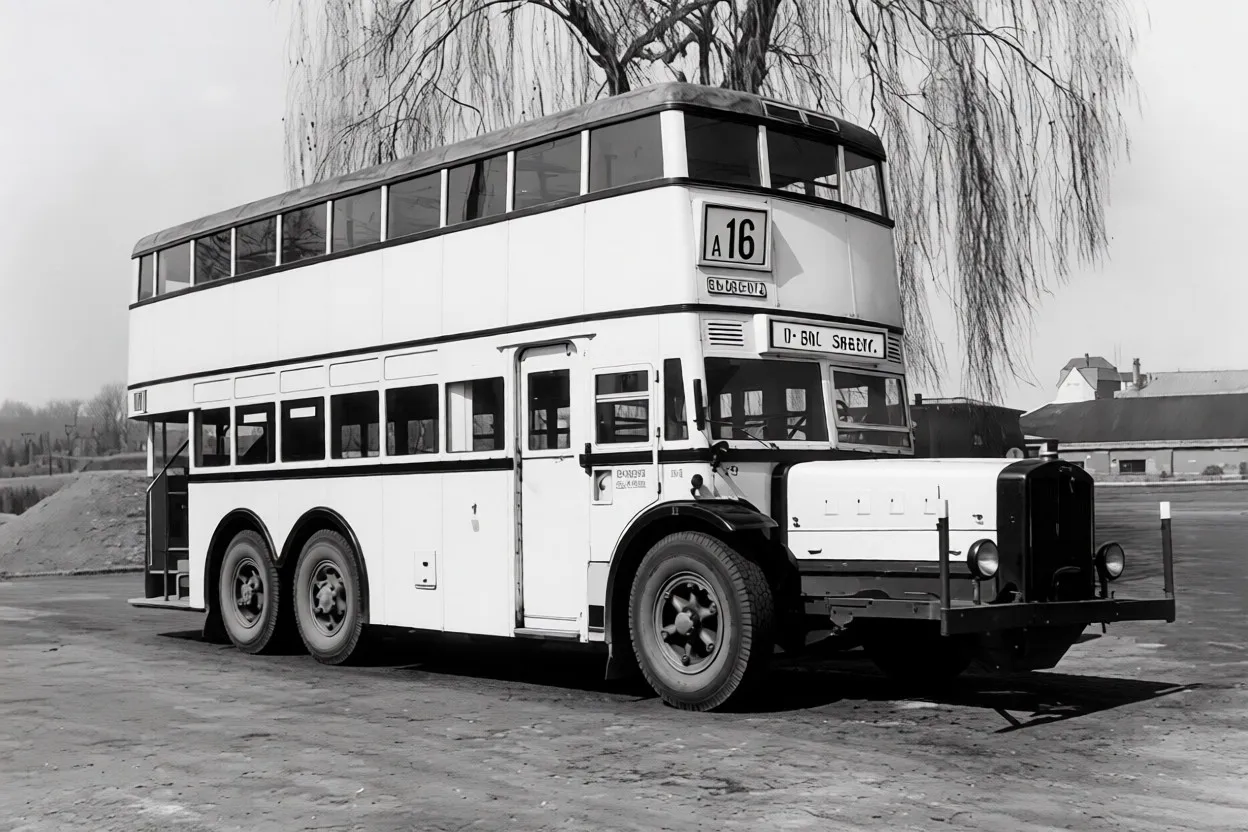
The three-axle double-decker D 38 was produced by the companies Büssing (90 units), Henschel (10 units) and Daimler-Benz (100 units) from 1938 to 1940. These vehicles were part of the Berlin streetscape until 1958.
The Second World War, which began in 1939, initially prevented further development. The three cab-overs were put into service between 1938 and 1940 and were in use in West Berlin until 1956 and in East Berlin until 1958.
Post-War Innovation: The Cabover
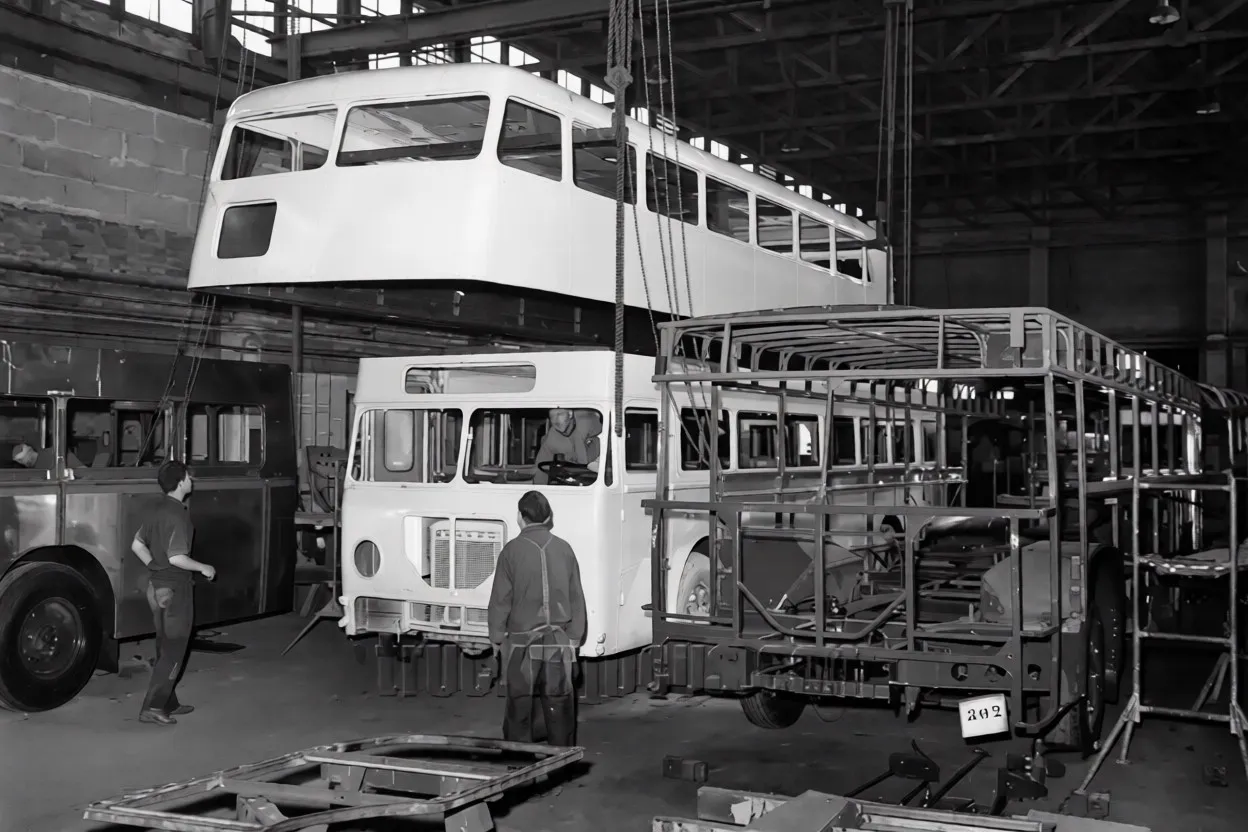
The new cabover double-deckers were based on Büssing chassis. The first series consisted of 39 three-axle and 70 two-axle vehicles, which were built by Orenstein & Koppel, Gaubschat and Deutsche Waggon- und Maschinenfabriken (later Waggon Union), all three located in what was then West Berlin.
The first new Berlin double-decker in cabover design was built in 1951. Series production of the new D2U 52 buses began the following year. Seventy of them were built on Büssing-NAG chassis.
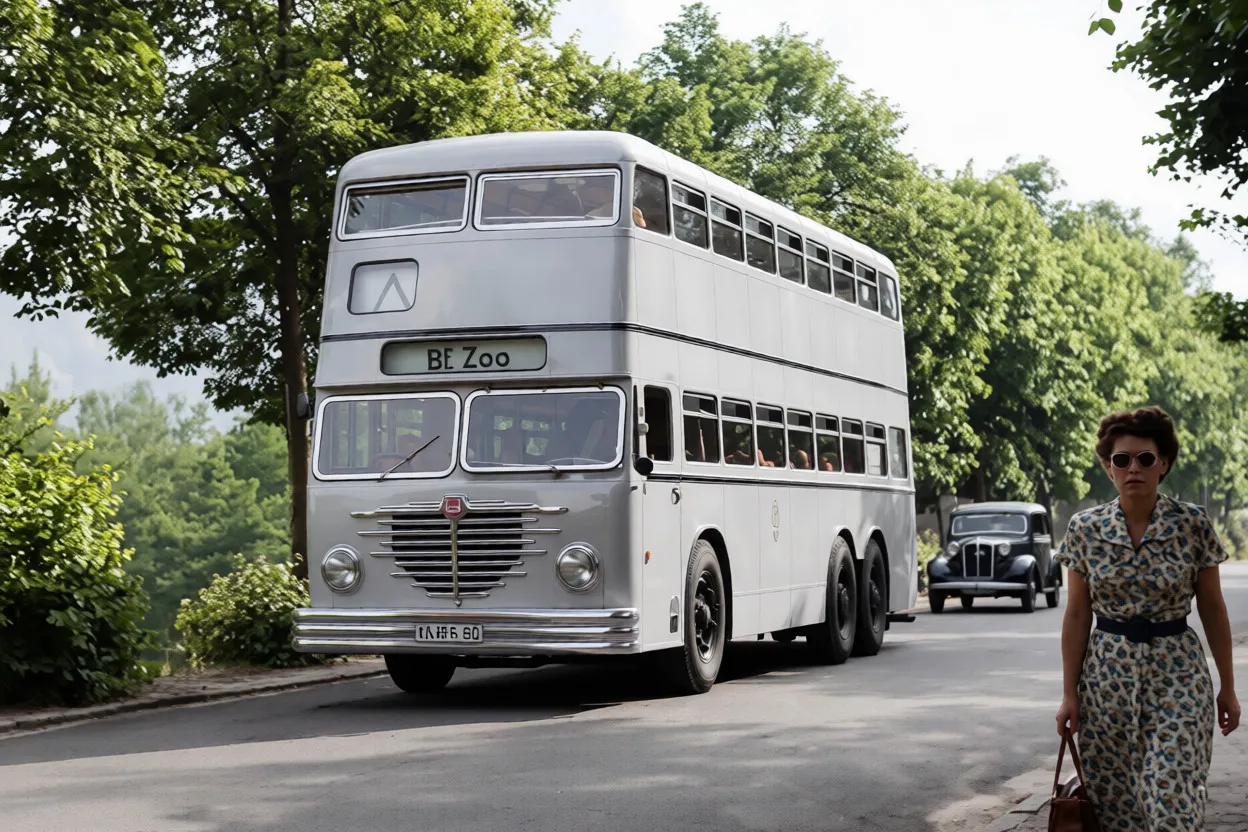
The D2U 52 or D2U 53 series with an underfloor engine can be recognized by the flat windscreens, which were no longer installed later, as curved glass was introduced in vehicle construction around 1954.
Life on the Bus in the 50s
We take a look at some details of the double-decker from the 1950s:
- Smokers: Smoking was permitted on the upper deck, while the lower deck remained smoke-free.
- Rear Platform: Until around 1960, all buses had open doors at the rear. Initially there was only a vertical bar in the middle of the entrance opening, but later designs featured a more elaborate construction with two vertical handrails.
The type D2U 55 double-decker already had curved windscreens in the area of the A-pillars. The year of construction 1955 can also be seen from the license plate, as from 1956 Berlin vehicles received new license plates beginning with the letter “B”.
East Berlin: A Different Path
Of course, development also continued in East Berlin. Between 1954 and 1959, VEB Waggonbau Bautzen built a total of 190 units of the Do 54 and Do 56 types with a flowing hood that looked very modern at the time.
The Trailer Buses
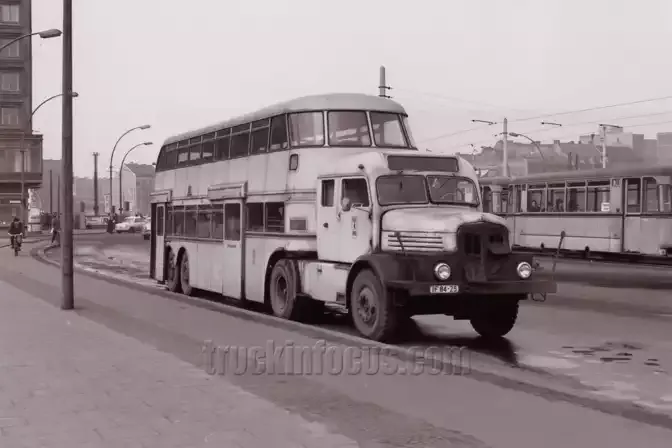
From 1953 to 1967, there were also seven double-deckers as semi-trailer combinations, known as DoSa, in East Berlin. The H6 tractor units and the semi-trailers came from VEB IFA Kraftfahrzeugwerk Werdau.
In fact, there was actually also a trolleybus double-decker articulated bus in East Berlin! The concept was developed at the VEB IFA Kraftfahrzeugwerk Werdau, but the vehicle was built at the VEB Waggonwerk Ammendorf.
The End of an Era
In the 1950s, all West Berlin double-deckers had the so-called Büssing spider on the front, i.e. the chrome-plated radiator grille with horizontal struts. This concealed the crest-shaped opening through which the engine breathed.
After that, the Büssing spider gave way to other front designs, right down to the unadorned look that Berlin double-deckers maintained for a long time. Today, the yellow double-decker remains the undisputed king of Berlin's streets.
About the Author

Transport Historian
This guide is written by Berlin enthusiasts who know that the city is too big to walk in a day. We aim to help you use the bus network smartly to unlock the best of Berlin without the stress of navigating the complex public transport zones.
Tags
Comments (0)
Loading comments...